Maersk Raises Outlook Again as Strong Demand and Freight Rates Boost Profit
2026-08-14
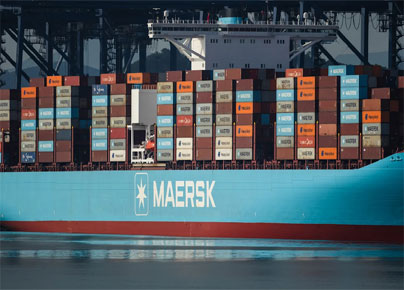
Danish shipping group Maersk (MAERSKb.CO) announced on Thursday that it has raised its full-year earnings guidance for the second time this year, surpassing profit forecasts as global container demand remained resilient amidst the ongoing conflict in the Middle East.
Surging freight rates, driven by port congestion and strong Chinese export growth, generated a significant windfall for the company, outweighing the additional costs associated with disruptions in the Middle East. This defied fears that the conflict might push the global economy into recession and reduce container demand. As a result, the company's shares rose by 5.8% at 10:28 GMT. In the second quarter, Maersk's profit before interest, taxes, depreciation, and amortisation (EBITDA) reached $3.0 billion, significantly exceeding the median forecast of $2.12 billion from a company-provided poll and up from $2.30 billion a year ago.
CEO Vincent Clerc reported that waiting times to berth have reached 12 days at the Port of Shanghai, as surging demand has overwhelmed chronically underinvested landside infrastructure across Northern Europe, South America, West Africa, and China. Clerc emphasised that the resulting bottlenecks, rather than the Middle East conflict, were driving freight rates higher.
Shipping companies are once again reaping the benefits of elevated freight rates due to severe port congestion, network bottlenecks, and strong demand. This scenario is reminiscent of the pandemic period when supply chain disruptions tightened capacity and increased industry profits. The company now projects an underlying EBITDA of between $10.5 billion and $12.5 billion this year, up from the previous estimate of $8 billion to $10 billion. Additionally, it expects an underlying operating profit between $4.5 billion and $6.5 billion, up from the previous forecast of $2 billion to $4 billion. Global container trade demand exceeded expectations in the second quarter, as growth in other regions more than compensated for a 40% decline in Middle East imports, with Chinese exports serving as the primary driver. Maersk noted, "This strength may extend into the third quarter of 2026, as exports from China show no signs of abating. However, the unresolved conflict in the Middle East continues to warrant caution."
German competitor Hapag-Lloyd (HLAG.DE) also recently raised its outlook, despite anticipating a $600 million impact from the crisis in the Middle East. The disruptions in the Middle East increased operating costs for Maersk's Ocean division by 19%, with the average bunker price rising 44% year-on-year. However, the company stated that it offset the impact through optimised fuel consumption and various commercial measures. Most shippers abandoned the Asia-Europe trade corridor through the Suez Canal following Houthi attacks in the Red Sea. Nevertheless, Maersk and Hapag-Lloyd announced a gradual return to the route in recent months. Currently, Clerc mentioned that Maersk is routing around a third of its normal traffic through the canal or the Red Sea, covering four of its thirteen services. He indicated that conditions for a full return to the Suez Canal by 2026 are developing, but Maersk is proceeding gradually to prevent chaos at already congested terminals.